16 December 2025
What Is Robotic Knee Replacement? Technology Explained Simply
Confused about robotic surgery? Learn exactly what robotic knee replacement is, how it works, and why it offers better precision than manual surgery. Explained by Dr. Abhijit Kale.

The term "robotic surgery" often conjures images of a machine performing an operation while the surgeon watches from another room.
This is a myth.
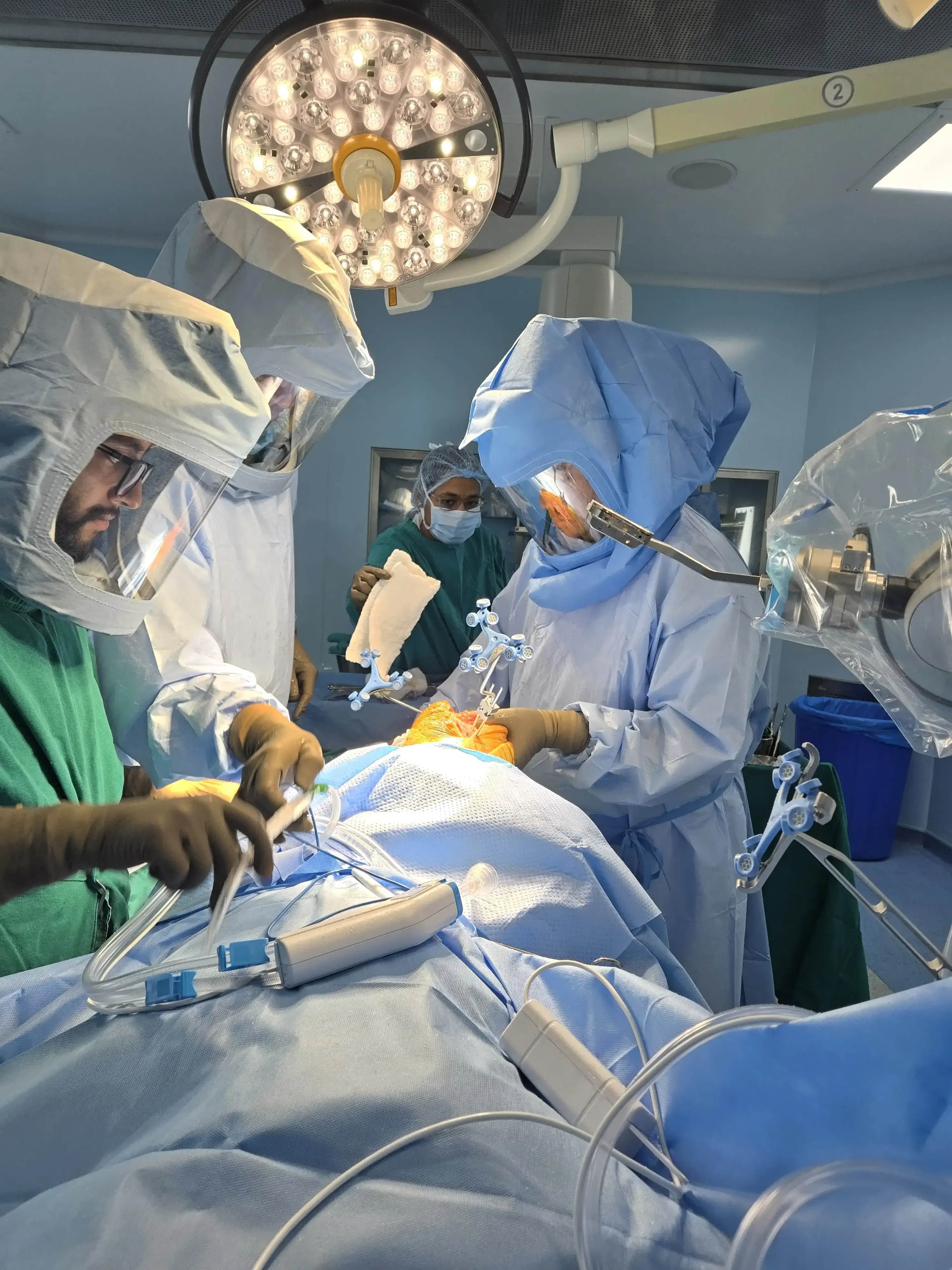
In reality, robotic knee replacement is a state-of-the-art procedure where the surgeon remains in 100% control, using a robotic arm as a high-precision tool to ensure perfect accuracy.
This guide explains what robotic knee replacement actually is, how it works, and why it is becoming the gold standard in orthopaedics.
So, What Is It?
Robotic knee replacement is a surgeon-guided, technology-assisted procedure.
It combines the surgeon's skill with computer navigation and a robotic arm to:
- Plan the surgery in 3D before making a single cut.
- Execute the bone cuts with sub-millimetre accuracy.
- Balance the ligaments perfectly for a natural feeling knee.
Think of it like using "GPS" for surgery—it guides the surgeon exactly where to go and prevents deviation from the perfect path.
How Does It Work? The 3-Step Process
Step 1: 3D Imaging & Planning
Before or during surgery, a 3D model of your specific knee anatomy is created (using CT scans or advanced mapping).
- The surgeon uses this virtual model to determine the exact size, fit, and position of the implant.
- This custom plan is unique to your knee.
Step 2: Intra-Operative Guidance
During the surgery, the robotic system tracks the movement of your leg in real-time.
- It provides live feedback on ligament tension and alignment.
- This allows the surgeon to make micro-adjustments before cutting any bone.
Step 3: Robotic-Assisted Resection
When it’s time to remove the damaged bone, the surgeon guides the robotic arm.
- Haptic Boundaries: The robot creates a virtual "safety zone". If the surgeon tries to move outside the planned area, the robot stops.
- This protects nearby nerves, arteries, and healthy tissue from accidental damage.
Robotic vs. Traditional: What’s the Difference?
| Feature | Traditional Surgery | Robotic Knee Replacement |
|---|---|---|
| Planning | X-rays (2D) | 3D Digital Model |
| Precision | Manual instruments | Sub-millimetre robotic accuracy |
| Tissue Damage | More soft tissue release needed | Minimal tissue disturbance |
| Outcome | Good | Excellent and Consistent |
| Surgeon Control | 100% Manual | Surgeon + Robot Assistance |
Why Is It Better?
The main advantage is precision.
In manual surgery, even the best hands can have a variance of a few degrees. With robotic assistance, accuracy is consistently within 0.5 mm and 0.5 degrees.
This leads to:
- Less Pain: Because less soft tissue is disturbed.
- Faster Recovery: Patients often walk sooner.
- Natural Feeling Knee: Better balance means the knee doesn't feel "mechanical."
- Longevity: Better alignment reduces wear on the implant.
Does the Robot Do the Surgery?
No. The robot cannot move or cut on its own. It is an extension of the surgeon's hand.
Dr. Abhijit Kale guides the instrument at all times. The robot simply ensures that what was planned on the computer is executed perfectly in reality.
Who Is It For?
Robotic knee replacement is suitable for almost all patients who need:
It is especially beneficial for patients with:
- Severe deformities.
- Previous trauma or hardware (plates/screws) in the leg.
- A desire for the fastest possible return to active life.
FAQs: Robotic Surgery
Is it more expensive?
There is usually a marginal difference in cost due to the disposable instruments used for the robot, but many patients find the faster recovery worth the investment.
Is it safe?
Yes. In fact, it is safer than manual surgery in many aspects because the "safety zones" prevent damage to surrounding tissues.
Does it take longer?
The surgery time is comparable to traditional surgery. The planning takes a few minutes more, but the execution is often faster and more precise.
Takeaway
Robotic knee replacement is not science fiction—it is science applied to better healing.
By combining Dr. Abhijit Kale's decades of experience with the precision of robotic technology, patients get the best of both worlds: human expertise and machine accuracy.
Want to know if robotic surgery is right for you? 👉 Learn more: Robotic Knee Replacement Benefits or Contact Us.
Need Expert Orthopaedic Care?
Consult Dr. Abhijit Kale, Mumbai's trusted expert in Robotic Joint Replacement & Spine Surgery. Get a personalized treatment plan today.


