16 December 2025
The Power of 3D Planning in Knee Replacement Surgery
How does 3D planning change knee surgery? Learn how CT-based custom planning allows surgeons to predict and perfect your knee replacement before entering the operating room.

Imagine building a house without a blueprint, deciding where the walls go as you lay each brick. That's roughly how traditional knee replacement planning worked for decades — skilled, but largely reactive, with many decisions made in the operating room itself.
Now imagine having a digital 3D replica of that house, where you can move walls and test the structure virtually before ever picking up a tool. That's the idea behind 3D planning in modern knee replacement surgery — a shift from reacting to what you find during surgery, to planning precisely for what you already know.
What Is 3D Surgical Planning?
Before surgery, imaging of your leg — commonly a CT scan covering the hip, knee, and ankle, or in some systems, imageless intraoperative mapping — captures detailed anatomical data specific to you.
Specialised software converts this into a virtual 3D model of your knee. This isn't just a static picture; it's a measurable, rotatable digital representation of your unique bone geometry, alignment, and deformity, which your surgeon can study and manipulate before your operation begins.
Why It Changes the Surgery
1. More Accurate Implant Sizing
Knee implants come in a range of standard sizes. Without detailed pre-operative planning, a surgeon has to estimate the best fit during the operation itself, which can mean compromising if you fall between sizes. With 3D planning, the surgical team can identify the most appropriate implant size and rotation in advance, reducing the guesswork involved and helping avoid problems like implant overhang.
2. Anticipating Surgical Challenges
Some patients have bone spurs (osteophytes) or significant deformity that can obscure the true underlying anatomy on standard X-rays. A 3D model can strip away these obscuring features virtually, allowing the surgeon to visualise the genuine bone structure underneath and plan how to correct the deformity safely and predictably.
3. Rehearsing the Procedure Virtually
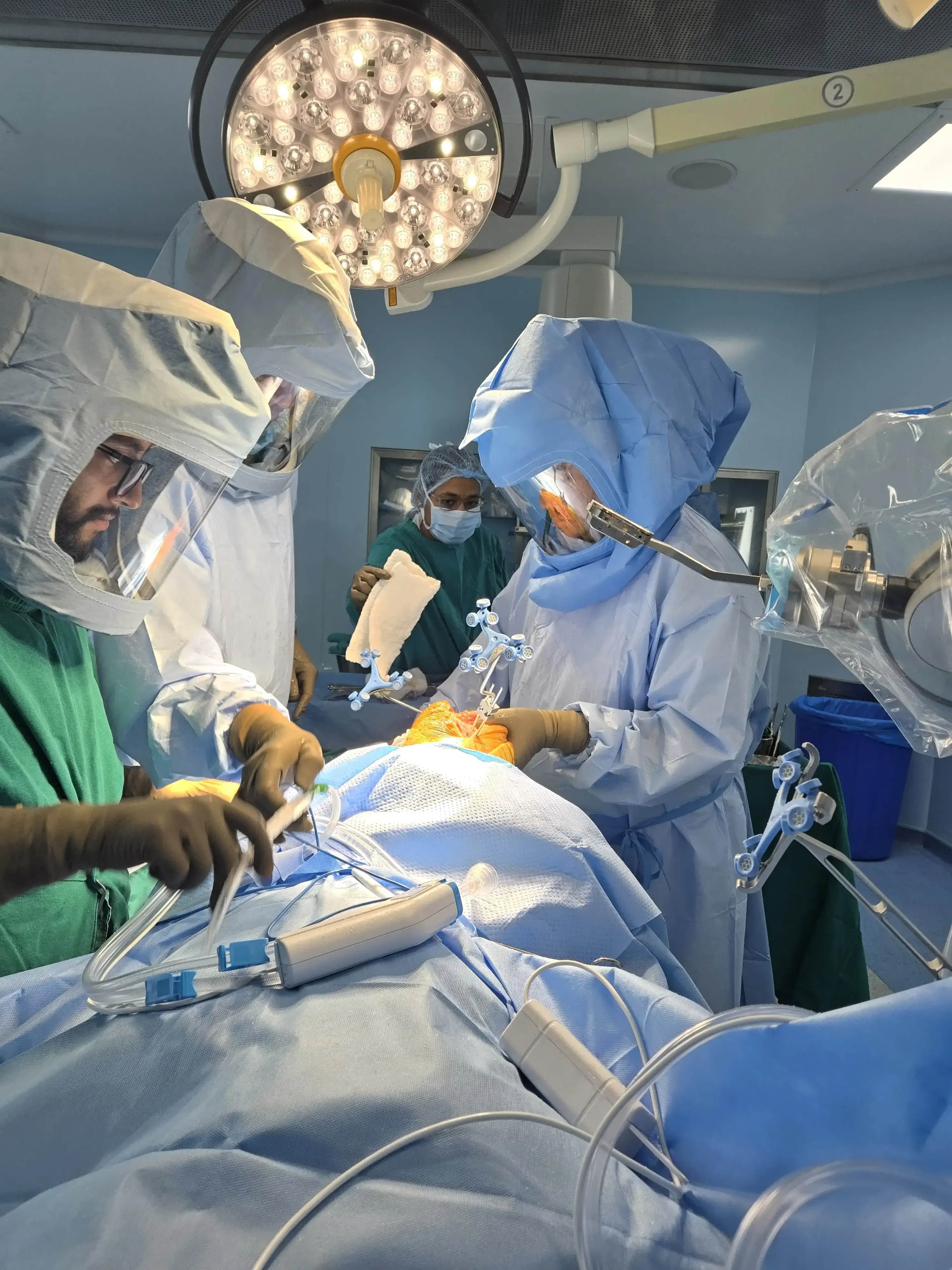
With 3D planning, much of the surgery is effectively rehearsed on a computer simulation before the patient enters the operating theatre. The surgeon can adjust implant tilt, rotation, and depth by fractions of a millimetre on screen, and observe how each adjustment is likely to affect overall leg alignment. Once the plan looks right, it's finalised and used to guide the actual procedure — including, where applicable, robotic-assisted execution of the plan.
CT-Based vs. Image-Free Planning
There are broadly two approaches to advanced, technology-assisted knee planning:
- CT-based planning uses a pre-operative CT scan to build a highly detailed 3D model well in advance of surgery, offering a thorough look at your anatomy before you're even in the operating theatre.
- Image-free (or "imageless") systems build the 3D map intraoperatively, using sensors and reference points captured during the surgery itself. This avoids the additional radiation exposure of a CT scan while still providing 3D visualisation and data during the case.
The right approach depends on the specific case, the surgical system available, and the surgeon's assessment of what will give the most reliable plan for your particular knee.
The Practical Benefits for Patients
The core advantage of 3D planning is predictability — replacing estimation with data wherever possible:
- More consistent outcomes, because the plan accounts for your individual anatomy rather than relying on population averages.
- Reduced surprises during surgery, since much of the critical thinking and measurement happens beforehand rather than being worked out live.
- Better-informed conversations before surgery, as the visual model can help patients understand their own knee anatomy and the reasoning behind implant choice.
It's worth being clear that 3D planning is a tool that supports better decision-making — the final outcome still depends heavily on the surgeon's experience in interpreting that data and executing the plan accurately.
FAQs
Does 3D planning mean I need an extra CT scan before surgery? It depends on the system used. CT-based platforms require a pre-operative scan, while image-free systems build the 3D map during surgery itself without additional scanning. Your surgeon will explain which approach is planned for your case and why.
Is 3D-planned surgery more expensive? It can involve additional planning steps and, in some cases, imaging costs, but many patients consider the improved precision and predictability worthwhile. Discuss the specifics with your surgical team as part of your overall cost conversation — our guide on the cost of knee replacement surgery in Mumbai offers useful context.
Does 3D planning guarantee a perfect result? No plan can guarantee perfection, since surgery still depends on the surgeon's skill in executing it and on how your body heals afterward. What 3D planning does is significantly reduce uncertainty and estimation, giving the surgeon a much clearer, more individualised roadmap to work from.
Is 3D planning only used with robotic surgery? Not exclusively. While it pairs naturally with robotic-assisted knee replacement, some conventional surgical approaches also use 3D planning data to guide instrumentation and decision-making, even without a robotic arm executing the final cuts.
Takeaway
Your knee is unique, and increasingly, so is the plan built for it. 3D planning replaces guesswork with detailed, individualised data — helping create a knee replacement designed specifically for your anatomy, with fewer surprises along the way.
Curious whether 3D planning is right for your surgery? Contact us or book a consultation to discuss your options with Dr. Abhijit Kale.
Need Expert Orthopaedic Care?
Consult Dr. Abhijit Kale, Mumbai's trusted expert in Robotic Joint Replacement & Spine Surgery. Get a personalized treatment plan today.


