16 December 2025
ACL Injury Treatment: Surgery vs. Rehab
Tore your ACL? You might not need surgery. We compare ACL reconstruction vs. conservative rehabilitation and who fits which path.

The Anterior Cruciate Ligament (ACL) is one of the four main stabilizing ligaments of the knee, running diagonally through the middle of the joint to prevent the shin bone from sliding forward relative to the thigh bone. It's also one of the most commonly injured ligaments in sport, particularly in activities involving sudden stops, pivots, or changes of direction — football, basketball, badminton, and skiing are frequent culprits.
For years, the standard advice was simple: a torn ACL meant surgery. That thinking has evolved. Today, the right treatment depends heavily on who you are, how you use your knee, and how your body responds to the injury — not just the fact that the ligament is torn.
How an ACL Tear Happens and Is Diagnosed
Most ACL injuries occur during a non-contact pivoting or landing motion, though direct contact injuries also happen in contact sports. Patients often describe hearing or feeling a "pop," followed by swelling within a few hours and a sensation that the knee feels unstable or "gives way."
Diagnosis typically involves a clinical examination testing knee stability, followed by an MRI scan to confirm the tear and check for associated injuries — ACL tears are frequently accompanied by meniscus tears or damage to other ligaments, which can influence the treatment decision.
Option 1: Surgery (ACL Reconstruction)
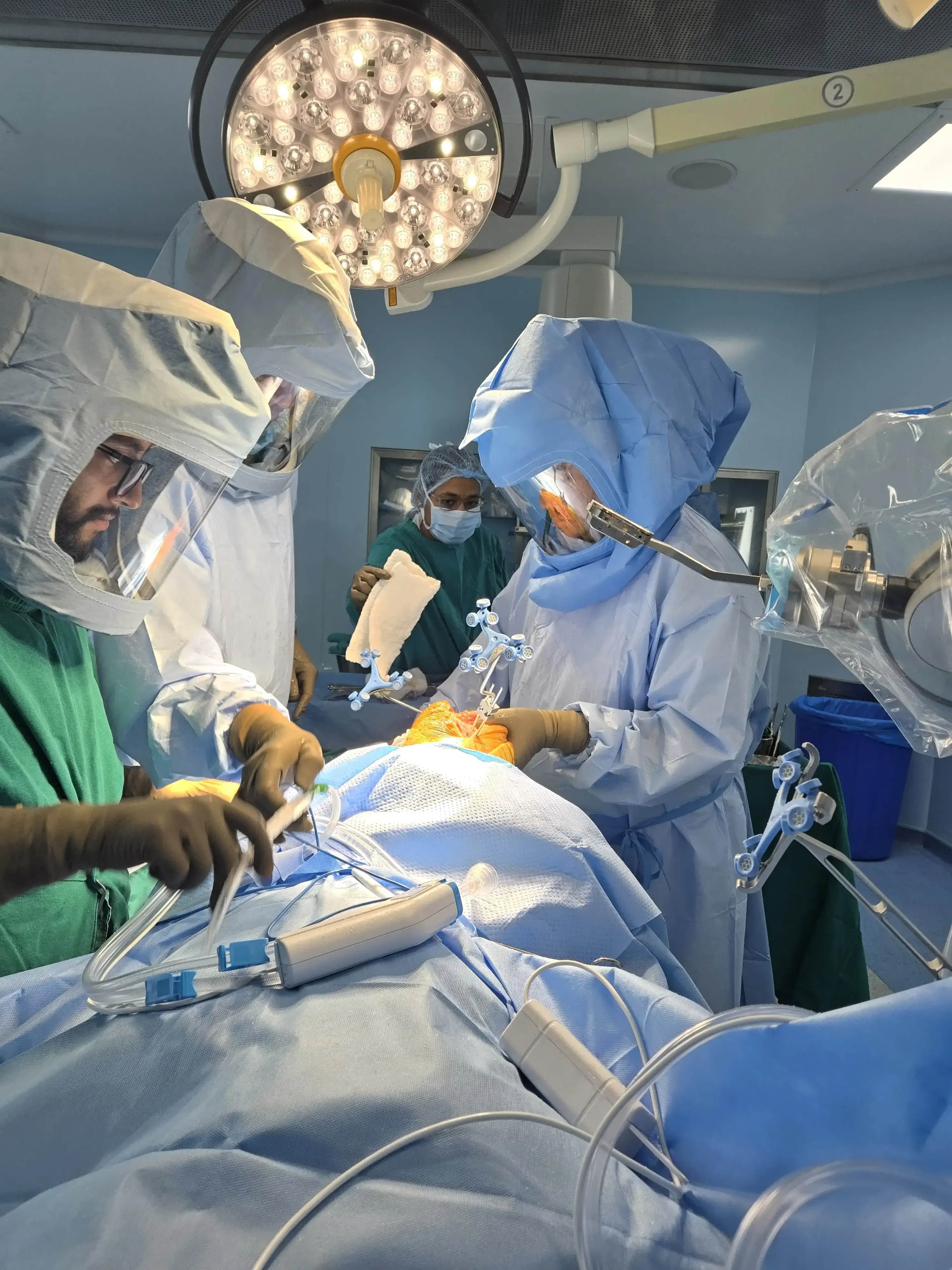
ACL reconstruction involves rebuilding the torn ligament using a tendon graft, most commonly taken from the patient's own hamstring or patellar tendon.
Who tends to need it:
- Athletes in pivoting sports — football, basketball, badminton, and similar activities put repeated rotational stress on the knee that an ACL-deficient knee often can't handle safely.
- Younger, highly active patients — reconstructing the ligament helps protect the meniscus and cartilage from the repeated micro-instability that can accelerate long-term joint damage.
- "Non-copers" — patients whose knee buckles or gives way even during ordinary daily activities like walking or descending stairs, regardless of age or activity level.
Option 2: Conservative Rehabilitation
Rehabilitation focuses on strengthening the muscles around the knee — particularly the hamstrings and quadriceps — to compensate functionally for the missing ligament.
Who tends to do well with this approach:
- Less active or older patients whose daily activities are largely straight-line movements like walking, cycling, or swimming, rather than pivoting sports.
- "Copers" — a subset of patients whose knee remains functionally stable despite the tear, often due to favorable anatomy or strong surrounding musculature.
A structured rehabilitation program under a physiotherapist is essential either way — even patients heading toward surgery benefit from "pre-habilitation" to reduce swelling and restore range of motion before the operation, and rehabilitation after surgery is just as critical as the surgery itself.
Weighing the Decision
| Factor | Favors Surgery | Favors Rehabilitation |
|---|---|---|
| Age | Younger, still active in sport | Older, primarily daily activities |
| Activity type | Pivoting/cutting sports | Straight-line activity (walking, cycling) |
| Instability | Frequent buckling, giving way | Feels stable during daily use |
| Occupation | Physically demanding work | Desk-based or low-impact work |
| Associated injuries | Meniscus or other ligament damage | Isolated ACL tear with no locking |
No single factor decides the outcome on its own — your surgeon will weigh these together along with a hands-on stability examination.
What About a Locked Knee?
If your knee is mechanically "locked" and won't fully straighten or bend, this often points to a displaced meniscus tear fragment rather than the ACL tear itself, and usually needs more urgent evaluation rather than a wait-and-see approach.
Recovery Expectations
If surgery is chosen, recovery is a gradual, staged process — early focus on reducing swelling and restoring motion, followed by progressive strengthening, and finally sport-specific training before a full return to competitive activity. Rushing this timeline is one of the most common causes of re-injury, so a structured plan matters as much as the surgery itself. If your goal is returning to sport, our guide on safe return to sport after knee surgery outlines the milestones typically used to judge readiness.
FAQs
Can a torn ACL heal on its own without surgery? The ACL itself generally does not heal back to its original strength without surgical reconstruction, since it has limited blood supply. However, many patients — particularly "copers" with lower activity demands — can function well without surgery by building enough surrounding muscle strength to stabilize the knee. A doctor's assessment determines which category you fall into.
How urgent is it to decide between surgery and rehab? Unless the knee is locked (usually from a meniscus fragment) or there's significant associated injury, most patients can safely take a few weeks to complete an initial rehabilitation trial before committing to surgery. This "trial of rehab" approach helps some patients avoid an operation altogether while giving others clarity that surgery is the right path.
What happens if I choose rehab and my knee keeps giving way? If instability continues despite a genuine effort at strengthening — meaning the knee buckles during daily activities, not just intense sport — this is usually a sign that surgery is the more appropriate path, since ongoing instability increases the risk of further cartilage and meniscus damage over time.
How long is recovery after ACL reconstruction? Recovery is typically measured in months rather than weeks, with early rehabilitation focused on motion and swelling control, followed by progressive strength and agility work before any return to pivoting sports. Your surgeon and physiotherapist will guide the specific timeline based on your graft type and progress.
Takeaway
There's no longer a one-size-fits-all answer to a torn ACL. Unless your knee is locked, it's usually reasonable to try a few weeks of focused rehabilitation first, rather than rushing into the operating room.
Dr. Abhijit Kale will assess your knee's stability, review your MRI, and help you choose the treatment path that matches your activity goals and lifestyle. Contact us to book a consultation.
Need Expert Orthopaedic Care?
Consult Dr. Abhijit Kale, Mumbai's trusted expert in Robotic Joint Replacement & Spine Surgery. Get a personalized treatment plan today.


