16 December 2025
Total Hip Replacement Recovery Time: From Hospital to Normal Life
How long does it take to recover from hip replacement? A complete timeline of hospital stay, walking, driving, and returning to sports.

One of the most common questions patients ask before hip replacement surgery is simple: "How long until I'm back to normal?" The honest answer is that recovery happens in stages, and most patients are pleasantly surprised by how quickly the early milestones arrive. Because the hip is a deep, well-supported ball-and-socket joint with a strong blood supply, it generally heals faster and with less stiffness than a knee replacement. Here is a realistic, stage-by-stage picture of what to expect.
The Recovery Timeline
Day 0 — Surgery Day
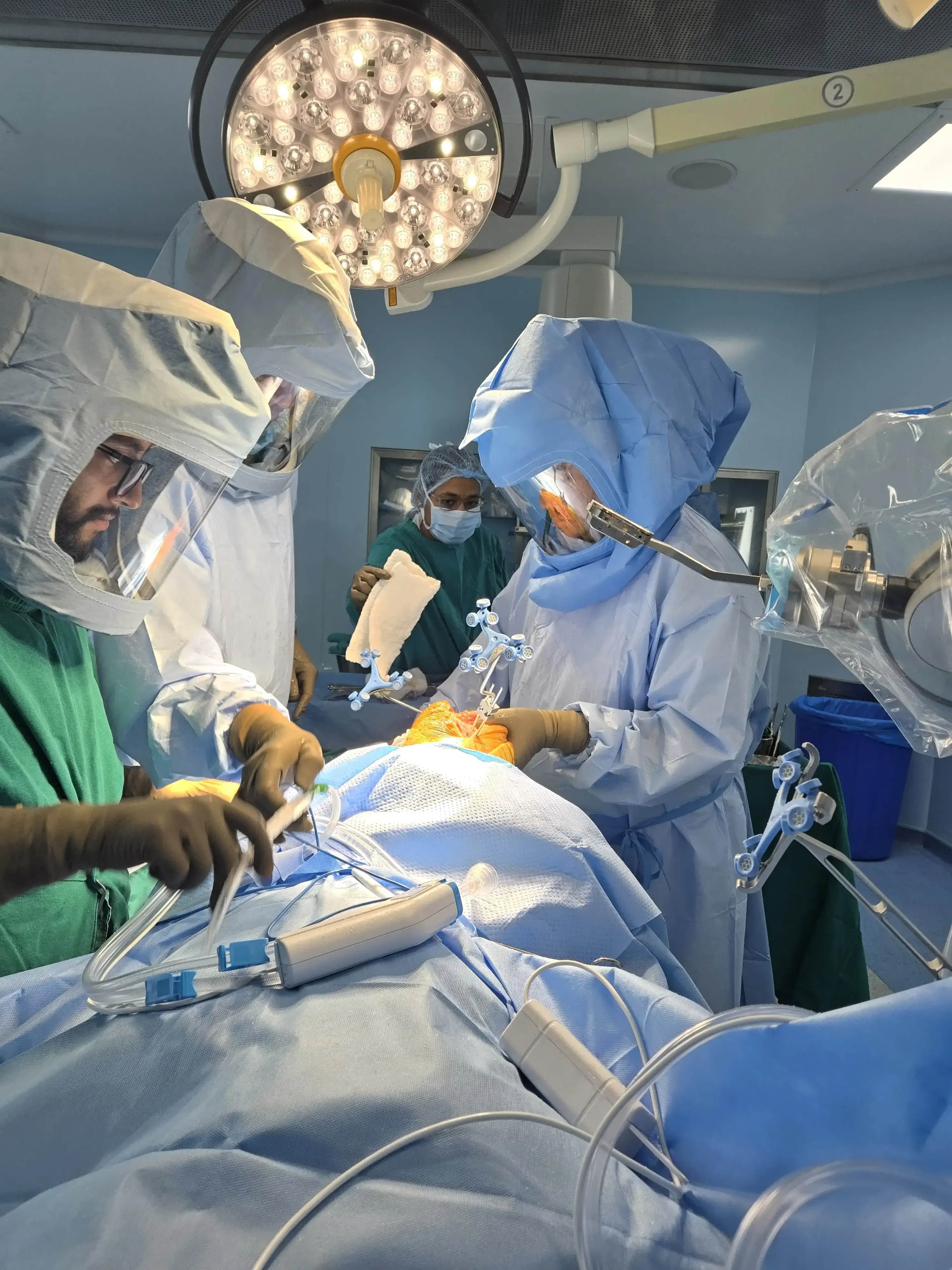
Surgery itself typically takes around 60-90 minutes. What surprises many patients is that they are usually helped to stand and take a few steps with a walker on the very same evening. Early movement, even a short walk to the bathroom, helps prevent blood clots and reduces early stiffness — it isn't optional extra effort, it's part of the treatment.
Days 1-3 — In Hospital
The initial hospital stay focuses on pain control and structured physiotherapy: learning how to safely sit, stand, transfer in and out of bed, and manage stairs. Most patients are discharged around day 3, though this varies based on age, general health, and how surgery went.
Weeks 1-3 — Early Home Recovery
At home, walking progresses from a walker toward a cane, alongside gentle exercises to rebuild strength in the glute and thigh muscles that stabilise the joint. Most patients transition off the walker to a cane, or even without support, somewhere around week 2-3, though this timeline is individual.
Weeks 4-6 — Regaining Independence
This is typically when patients notice a real shift in confidence. Driving is often permitted around this stage, provided pain medication has been stopped and reaction times feel normal — always confirm this specifically with your surgeon rather than assuming. Walking distance and stamina improve steadily, and many patients return to desk-based work during this window.
Months 3-6 — Full Recovery
By three to six months, most patients have a near-normal gait and can return to lower-impact recreational activities such as brisk walking, cycling, swimming, and golf. The new hip typically starts to feel less like "a replacement" and more like a natural part of the body.
Why Hips Recover Differently Than Knees
Unlike the knee, the hip joint is deeply cushioned by large surrounding muscles and rarely develops significant stiffness after replacement. The main early obstacle is usually muscle weakness rather than joint stiffness — the muscles around the hip were often compensating for pain before surgery and need retraining afterward. Once strength returns, the characteristic limp that many patients had before surgery typically resolves on its own.
Factors That Influence Your Personal Timeline
Every recovery is individual, and several factors shape how quickly you progress:
- Pre-surgery fitness and muscle strength — patients who are stronger going in generally recover faster
- Consistency with physiotherapy — recovery is a partnership between surgeon and patient, not something surgery alone accomplishes
- Overall health conditions such as diabetes or cardiovascular disease, which can extend healing time
- Surgical approach and technique used, which your surgeon will discuss with you beforehand
- Body weight, since excess load on a newly healing joint can slow the pace of rehabilitation
Staying on Track During Recovery
- Attend every physiotherapy session, even once you start feeling confident
- Don't skip prescribed home exercises on days you feel "fine" — consistency matters more than intensity
- Report unusual swelling, redness, fever, or increasing pain promptly rather than waiting for a scheduled visit
- Set realistic weekly goals rather than comparing your pace to another patient's experience
FAQs
Is hip replacement recovery really faster than knee replacement? For most patients, yes. Hips tend to develop less post-surgical stiffness than knees, largely due to differences in joint anatomy and the surrounding soft tissue. That said, individual results vary, and your surgeon can give you a more specific comparison based on your own joint condition.
When can I climb stairs normally again? Most patients can manage stairs safely, with a rail, within the first couple of weeks, using a "step up with the good leg, step down with the operated leg" technique initially. A fully normal stair pattern usually returns within a few weeks to a couple of months.
How much does recovery cost in terms of missed work? This depends heavily on the nature of your job. Desk-based work is often possible within 4-6 weeks; physically demanding jobs may need a longer leave. It's worth discussing your specific occupation with your surgeon well before your surgery date so you can plan appropriately — see our guide on hip replacement cost in Mumbai for related planning information.
What if my recovery feels slower than these timelines? Timelines are averages, not guarantees. Age, pre-existing muscle strength, and how closely you follow your rehab plan all shift the pace. If you feel you're falling significantly behind, raise it with your surgical team rather than assuming something is wrong on your own — a check-up can usually clarify what's going on and adjust your plan.
Takeaway
Hip replacement recovery is a structured process with clear, achievable milestones — most patients are walking with support the same day, off aids within weeks, and living an active, near-normal life within a few months. The short period of disciplined rehabilitation is a small investment against years of restored mobility.
Ready to discuss your own recovery plan? Contact us to book a consultation with Dr. Abhijit Kale.
Need Expert Orthopaedic Care?
Consult Dr. Abhijit Kale, Mumbai's trusted expert in Robotic Joint Replacement & Spine Surgery. Get a personalized treatment plan today.


