16 December 2025
Can I Sit on the Floor After Knee Replacement?
Is floor sitting possible with an artificial knee? We explain the reality of high-flex knee replacements and safe techniques for sitting on the floor.

This is one of the most common questions asked by Indian patients considering knee replacement: "Will I be able to sit cross-legged, use an Indian-style toilet, or pray while seated on the floor again?"
For a lifestyle built around floor seating — during meals, prayer, and family gatherings — this isn't a minor detail. It's central to how patients picture their life after surgery.
The honest answer: it depends on your implant, your pre-surgery flexibility, and your rehabilitation. Here's what actually determines whether floor sitting is realistic for you.
Standard vs. High-Flex Knee Implants
Not all knee implants are designed with the same range of motion in mind.
- Standard implants are generally designed and tested for safe bending up to roughly 110–120 degrees — enough for walking, using chairs, and climbing stairs, but usually not enough for deep squatting or cross-legged sitting.
- High-flexion ("high-flex") implants are designed to allow safe bending beyond this range, often up to around 150 degrees in appropriate patients, which can make squatting and cross-legged sitting achievable for some people.
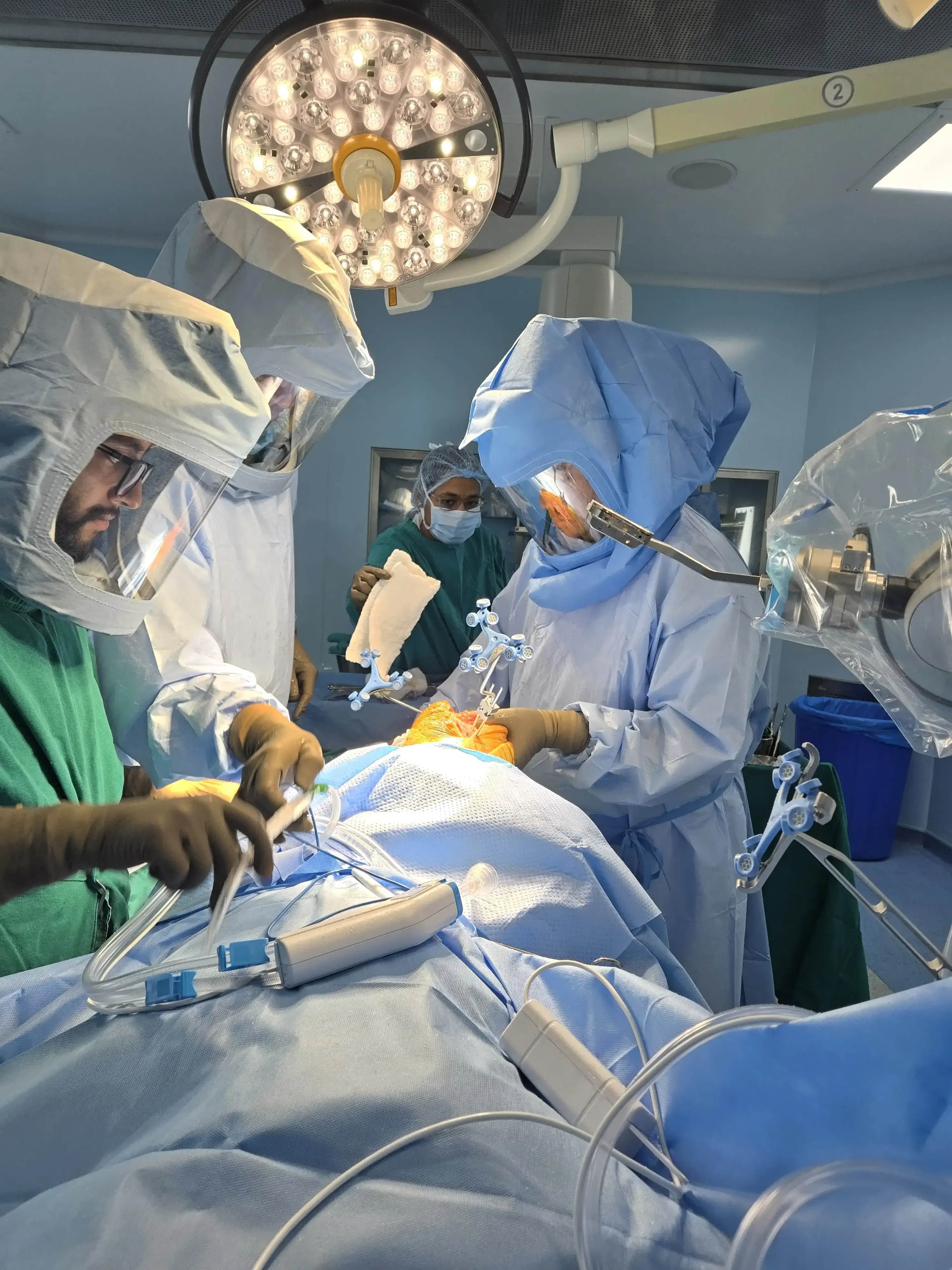
Dr. Abhijit Kale often considers high-flex implant designs for patients whose lifestyle depends on floor sitting, particularly when combined with robotic-assisted planning to fine-tune implant positioning for maximum safe flexion.
Why the Implant Alone Isn't Enough
Having a high-flex knee is only part of the equation. Achieving deep flexion after surgery depends on several other factors working together:
- Pre-operative flexibility. If your knee was already very stiff or you hadn't been able to sit on the floor for years before surgery, tight soft tissues, scarring, and muscle deconditioning make it much harder to regain deep flexion afterward — even with the right implant.
- Body composition. Larger thigh or calf muscles can physically limit how far a knee bends, regardless of implant design, simply because there's more soft tissue in the way.
- Consistent rehabilitation. Reaching deep flexion safely takes months of progressive stretching and strengthening under proper guidance — it rarely happens by accident.
- Individual healing. Scar tissue formation, swelling control, and how well the soft tissues heal all vary from person to person.
Because of this, no honest surgeon can guarantee floor sitting before surgery. What we can do is set a clear, realistic goal, choose an implant and surgical plan suited to that goal, and structure your rehabilitation around it from day one.
A Safe Path Back to Floor Sitting
If floor sitting is a priority for you, discuss it with your surgeon before surgery so it can be factored into implant choice and planning. During rehabilitation:
- Progress gradually. Start with a low stool or firm cushion rather than going straight to the floor. This reduces strain while you build confidence and flexibility.
- Use support to get up and down. Holding onto a stable piece of furniture or using your arms to push up protects the knee from awkward twisting loads while it's still adapting.
- Prioritise flexion exercises. Heel slides, seated knee bends, and guided stretching from your physiotherapist all help you work toward deeper bending safely. See our guide to home exercises after knee surgery for a starting routine.
- Don't force it. Pushing into pain to achieve a deeper bend can cause swelling and setbacks. Flexion should be built up steadily, not forced in a single session.
What About Indian-Style Toilets?
Squatting fully for an Indian-style toilet requires even more knee flexion than most cross-legged sitting positions, along with ankle and hip flexibility. Many patients who achieve good flexion can eventually manage this, but it's one of the more demanding positions for a replaced knee. If this is important to you, raise it specifically with your surgeon — in many homes, a raised commode seat or western-style fixture is a simpler, safer long-term solution regardless of implant type.
FAQs
Will every patient with a high-flex implant be able to sit cross-legged? No. The implant makes deep flexion possible, but it doesn't guarantee it. Muscle bulk, scar tissue, pre-surgery flexibility, and rehab consistency all play a role in the final result.
How long does it take to work toward floor sitting after surgery? Most patients need several months of dedicated flexion exercises and gradual practice before attempting floor sitting, and it should only be attempted once your surgeon or physiotherapist confirms your knee has adequate strength and range of motion.
Is it dangerous to sit cross-legged with a knee replacement? When your surgeon has cleared you and your flexion is adequate, cross-legged sitting is generally not considered dangerous to a well-positioned implant. The bigger risk is attempting it too early, before your muscles and healing tissues are ready, which can cause pain or swelling rather than implant damage.
Can I ask for a high-flex implant even if my surgeon doesn't suggest it? Yes — this is exactly the kind of lifestyle goal you should raise during your pre-surgery consultation. Your surgeon can then explain whether it's suitable for your specific knee and expectations.
Takeaway
Floor sitting after knee replacement is possible for many patients, but it depends on the right implant choice, realistic pre-surgery expectations, and disciplined rehabilitation — not on the surgery alone. If floor sitting matters to your daily life, say so clearly during your consultation so it can be planned for from day one.
Contact us to discuss your lifestyle goals with Dr. Abhijit Kale before deciding on your knee replacement plan.
Need Expert Orthopaedic Care?
Consult Dr. Abhijit Kale, Mumbai's trusted expert in Robotic Joint Replacement & Spine Surgery. Get a personalized treatment plan today.


