16 December 2025
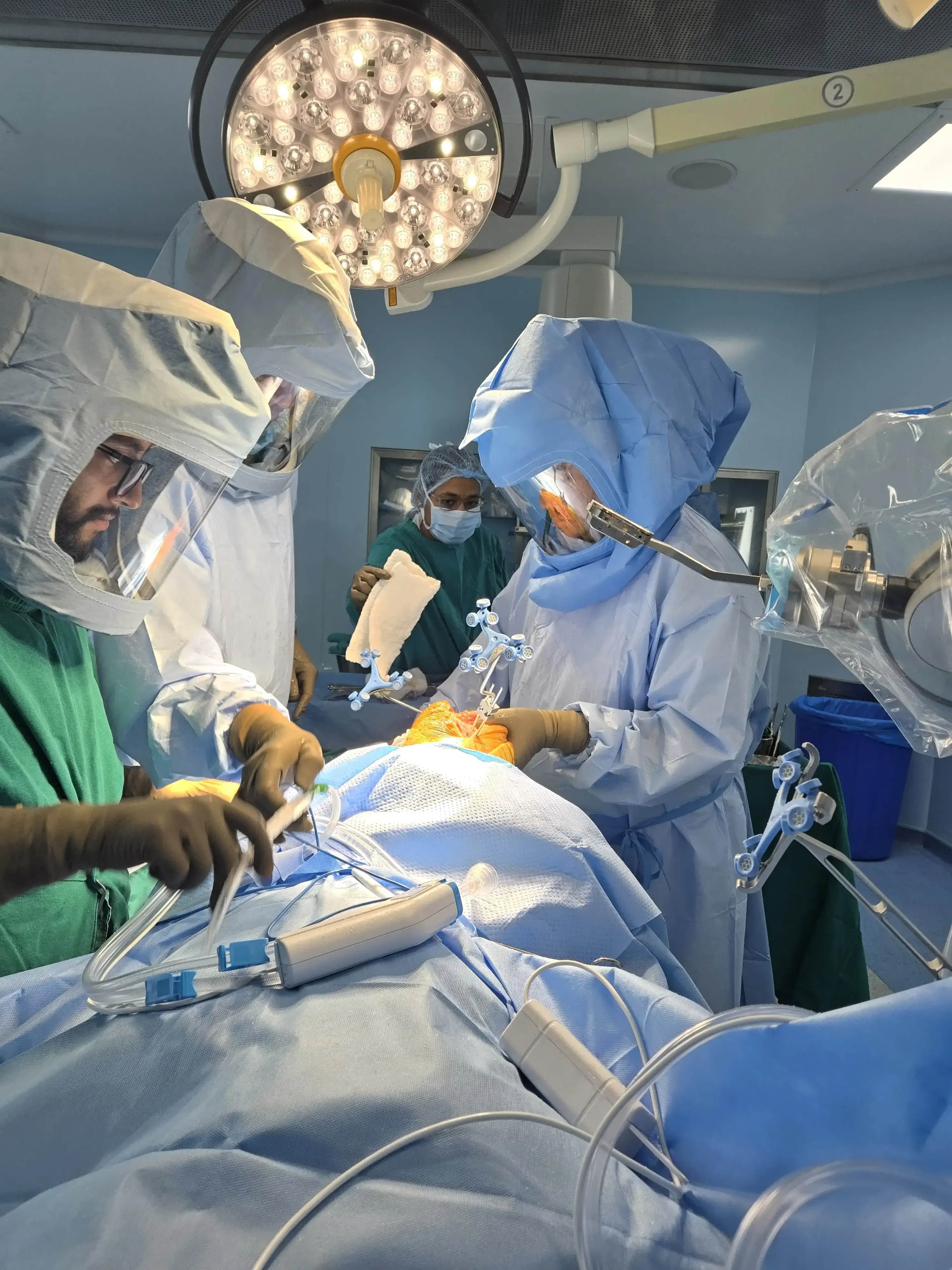
Robotic Hip Replacement: Precision for a Perfect Fit
Robotics isn't just for knees. Learn how Robotic Hip Replacement ensures accurate cup placement, equal leg lengths, and a lower risk of dislocation.

The hip is a ball-and-socket joint. If the socket (the "cup") is positioned even a few degrees off, the ball can slip out of place — a dislocation — or the plastic liner can wear unevenly over time.
Robotic hip replacement solves this geometry problem with a level of precision that's difficult to match by eye and feel alone.
The Core Benefits of Robotic Hip Replacement
1. Precise Cup Placement — No More "Safe Zone" Guessing
Traditionally, surgeons aim for a "safe zone" of acceptable angles for the socket, based on experience and intraoperative judgement. Robotic guidance calculates the ideal angle for your anatomy before the first cut and confirms the implant is placed within that target.
- Benefit: A meaningfully lower risk of post-operative dislocation, one of the most common early complications of hip replacement.
2. Equal Leg Length
One of the most frequent complaints after conventional hip surgery is a feeling that the operated leg is longer or shorter than the other. Robotic systems measure leg length and offset in real time during the procedure.
- Benefit: Balanced leg length and a more natural gait from early recovery.
3. Bone Preservation
The robotic plan is built around your specific anatomy, so only the damaged bone is removed rather than a standardised amount.
- Benefit: More of your natural bone stock is preserved, supporting stronger implant fixation — useful if a revision surgery is ever needed decades later.
4. Reduced Soft-Tissue Trauma
Precise planning also means less disruption to the muscles and soft tissue around the hip during implant placement, which can translate into less post-operative pain and a smoother early recovery.
Who Benefits Most from Robotic Hip Replacement?
Robotic guidance helps every patient, but it is particularly valuable for:
- Patients with complex anatomy, such as hip dysplasia
- Patients with a stiff or fused spine (previous spinal fusion), where the hip has to compensate more for movement — precise cup positioning matters even more here
- Active patients who want the most stable, durable hip possible
- Patients undergoing revision surgery after a previous hip replacement
Robotic Hip vs. Traditional Hip Replacement
| Factor | Traditional Surgery | Robotic-Assisted Surgery |
|---|---|---|
| Cup positioning | Surgeon judgement, "safe zone" | Pre-planned, verified in real time |
| Leg length accuracy | Estimated intraoperatively | Measured and adjusted live |
| Dislocation risk | Slightly higher | Reduced |
| Bone preservation | Standard resection | Anatomy-specific, bone-sparing |
FAQs
Is robotic hip replacement more painful than traditional surgery? No — if anything, the reduced soft-tissue disruption often means less early post-operative pain, though individual recovery varies.
Does robotic hip surgery cost more? There is typically a modest additional cost for robotic instrumentation. See our hip replacement cost guide for a full breakdown.
How long does a robotic hip implant last? Modern hip implants, robotic or traditional, typically last 15–20+ years depending on implant material and patient activity level. Precise positioning may reduce uneven wear over time.
Am I a candidate for robotic hip replacement? Most patients needing hip replacement are candidates. A consultation with X-rays will confirm suitability for your specific anatomy.
Takeaway
Robotics adds a layer of precision that the human eye and hand alone cannot consistently reproduce. For a hip that feels stable, balanced, and natural from the first steps of recovery, robotic-assisted replacement is worth discussing with your surgeon.
Need Expert Orthopaedic Care?
Consult Dr. Abhijit Kale, Mumbai's trusted expert in Robotic Joint Replacement & Spine Surgery. Get a personalized treatment plan today.


