16 December 2025
Knee Replacement Complications: What Are the Risks?
Understand the potential complications of knee replacement surgery, from infection to blood clots. Learn how Dr. Abhijit Kale minimizes these risks for a safe recovery.

Every surgical procedure carries some level of risk, and knee replacement is no exception. While total knee replacement is considered a safe and well-established procedure with generally reliable outcomes, being informed about potential complications is an important part of preparing for surgery.
We believe in transparency with our patients: we don't just talk about the benefits of surgery, we also explain the risks clearly — and, more importantly, what we do to reduce them.
Common Risks and How They're Managed
1. Blood Clots (DVT/PE)
Deep vein thrombosis — a blood clot forming in the leg veins — is a recognised risk after any lower-limb surgery. In rare cases, a clot can travel to the lungs (pulmonary embolism), which is a more serious event.
How it's managed: Calf compression during surgery, blood-thinning medication in the days and weeks afterward, and — most importantly — early walking. Getting patients moving as soon as safely possible after surgery is one of the most effective ways to reduce clot risk.
2. Infection
Infection can occur at the skin incision or, less commonly, deeper around the implant itself. Deep infection is uncommon but is one of the more serious complications because it can require further treatment or, occasionally, revision surgery.
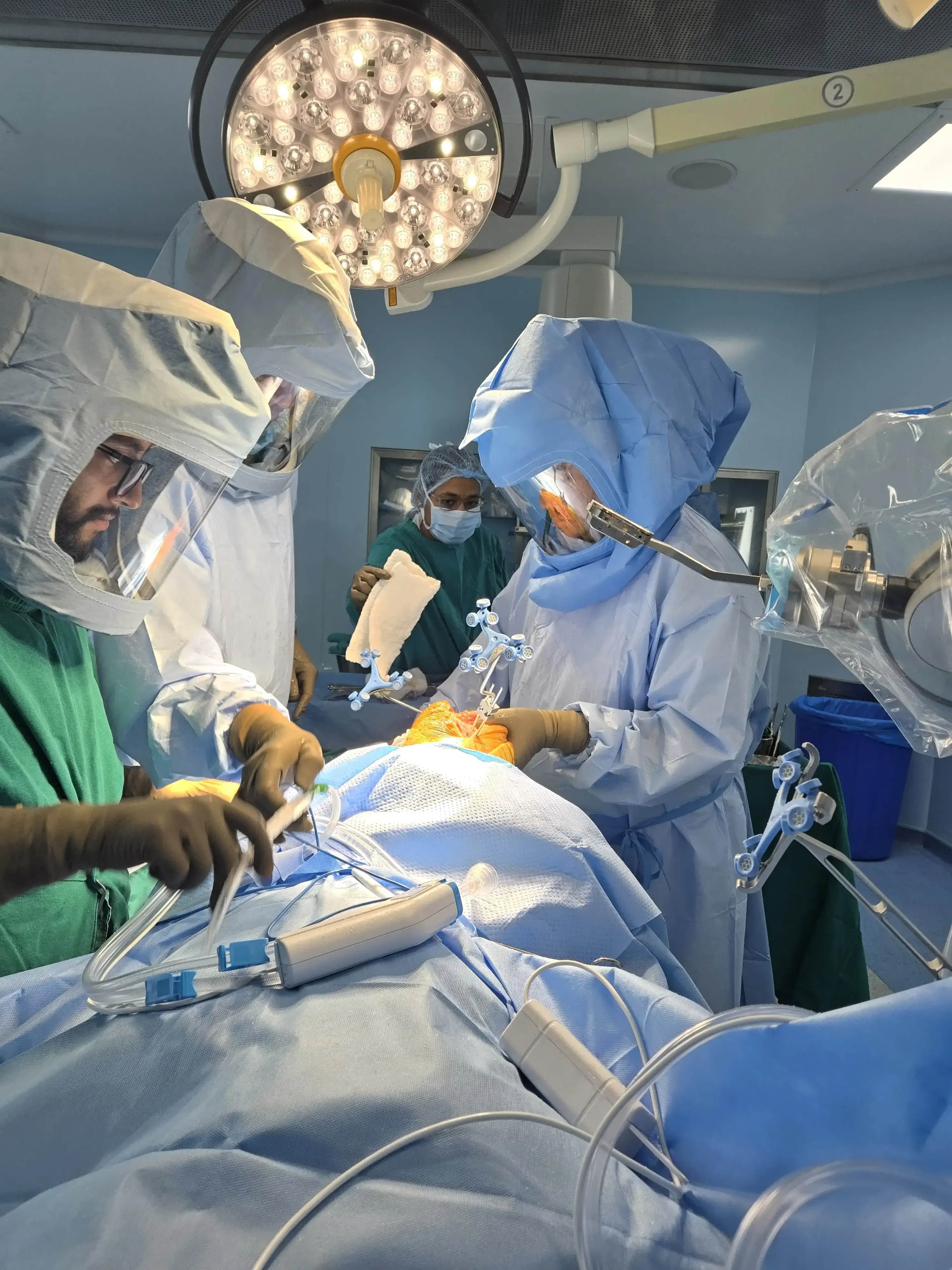
How it's managed: Strict sterile operating theatre protocols, prophylactic antibiotics given around the time of surgery, and controlled airflow ("space suit") systems in the operating theatre. Patients also play an important role — keeping the wound clean and dry, and ensuring conditions like diabetes are well controlled before and after surgery, meaningfully lowers infection risk.
3. Stiffness (Arthrofibrosis)
In some patients, the knee forms excess scar tissue after surgery, restricting how far it can bend. This is more likely in patients who had significant stiffness before surgery or who are slow to start moving the knee afterward.
How it's managed: Tissue-sparing surgical technique — including robotic-assisted surgery, which can reduce soft-tissue trauma during the procedure — combined with early, guided physiotherapy to keep the joint moving through its healing phase.
4. Nerve or Blood Vessel Injury
Rare injury to the nerves or blood vessels running near the knee joint can occur during surgery.
How it's managed: Careful surgical technique and, where used, robotic-arm systems that establish "safety zones" around critical structures, helping prevent the surgical saw from straying beyond the planned area.
5. Implant Loosening or Wear
Over many years, an implant may gradually loosen from the bone, or the plastic (polyethylene) component may wear down. This is a long-term consideration rather than an early complication, and modern implants typically last 15–20 years or more, as discussed in our article on how long a knee replacement lasts.
How it's managed: Precise implant alignment at the time of surgery is one of the strongest factors in preventing uneven wear and premature loosening — which is one of the reasons accurate planning and positioning matter so much during the original surgery.
6. Persistent Pain or Dissatisfaction
A small proportion of patients report ongoing discomfort or feel their knee doesn't feel entirely "natural" even after a technically successful surgery.
How it's managed: Setting realistic expectations before surgery, combined with thorough rehabilitation, helps most patients achieve the function and comfort they're hoping for. If pain persists unexpectedly, it's worth a detailed follow-up review with your surgeon — our article on can knee replacement fail covers this in more depth.
When to Contact Your Doctor After Surgery
Contact your surgical team promptly if you notice any of the following:
- Redness that is spreading around the wound, rather than settling
- Fever above 101°F (38.3°C)
- Calf pain or swelling that doesn't improve with rest and elevation
- Discharge, pus, or an unusual odour from the incision
- Sudden increase in pain or swelling after a period of steady improvement
Catching these signs early makes them far easier to treat, so don't hesitate to reach out rather than waiting to see if symptoms resolve on their own.
FAQs
Is anaesthesia itself risky for knee replacement? Regional anaesthesia (spinal or epidural) is commonly used for knee replacement and is generally considered safer than general anaesthesia for many patients, while also providing effective pain relief after surgery. Your anaesthetist will assess your individual health to recommend the safest option for you.
What is the overall risk of death from knee replacement surgery? The mortality rate for elective knee replacement is very low, broadly comparable to many routine surgical procedures, provided the patient is medically optimised beforehand. Your surgical and anaesthesia team will assess your fitness for surgery in advance to minimise this risk.
Does robotic surgery reduce the risk of complications? Robotic-assisted techniques can improve the precision of bone cuts and implant alignment, and may reduce soft-tissue trauma in some cases, which can lower certain risks such as stiffness and uneven wear. However, no technology eliminates risk entirely, and the surgeon's skill and judgement remain central to a safe outcome.
How common are serious complications overall? Serious complications are uncommon in appropriately selected, medically optimised patients undergoing surgery with an experienced team. That said, "uncommon" is not "zero," which is why understanding the warning signs and following your post-operative instructions closely still matters.
Takeaway
Complications after knee replacement are relatively rare, and most are manageable or treatable when caught early. Choosing an experienced, high-volume surgeon, following pre-operative optimisation advice, and staying alert to warning signs afterward all meaningfully reduce your risk profile.
As always, discuss your personal risk factors with your surgeon rather than relying on general statistics alone — your age, health conditions, and lifestyle all influence your individual risk. Contact us with any concerns so you can move forward with your surgery confidently and well-informed.
Need Expert Orthopaedic Care?
Consult Dr. Abhijit Kale, Mumbai's trusted expert in Robotic Joint Replacement & Spine Surgery. Get a personalized treatment plan today.


