16 December 2025
The 4 Stages of Knee Arthritis: Which Stage Are You In?
Knee arthritis gets worse over time. Learn about the 4 stages of osteoarthritis, from early symptoms to severe joint damage, and the best treatments for each stage.

Osteoarthritis (OA) is a progressive disease — it doesn't happen overnight. It develops gradually across four recognised stages, and the right treatment depends heavily on how advanced the condition has become. Understanding which stage you're likely in can help you have a much more focused conversation with your doctor, rather than a general one about "knee pain."
Here is a breakdown of the four stages of knee arthritis, what's physically happening at each one, and what treatment typically looks like.
Stage 1: Minor (Doubtful)
What's happening: Very minor wear is present on the cartilage surface, and tiny bone spurs (osteophytes) may just be beginning to form at the joint margins.
Symptoms: Usually none. Some people notice occasional, mild stiffness, but pain is typically absent at this stage — this is often why Stage 1 arthritis is discovered incidentally on an X-ray taken for another reason.
Treatment:
- Regular low-impact exercise to keep the joint healthy and mobile
- Supplements such as glucosamine and chondroitin may offer modest benefit for some patients, though evidence is mixed — discuss with your doctor before starting any supplement
- General attention to weight and activity levels as preventive habits
Stage 2: Mild (Minimal)
What's happening: Bone spurs become visible on X-ray. Cartilage has started to thin, but the joint space is still largely preserved and the bones are not yet rubbing against each other.
Symptoms:
- Pain after a long walk, run, or extended period of standing
- Stiffness when waking up or after sitting for a long stretch — see our guide on morning knee stiffness
- Tenderness when kneeling or pressing on the joint line
Treatment:
- Weight loss if overweight, since this directly reduces the mechanical load on the joint
- Low-impact exercise such as swimming, cycling, or daily walking
- Shoe inserts or a supportive knee brace
- Pain relief medication (NSAIDs) used as needed rather than continuously
Stage 3: Moderate (Significant)
What's happening: Cartilage shows clear gaps, cracks, and thinning. The gap between the bones on X-ray is visibly narrowing, and bone spurs are larger and more established.
Symptoms:
- Frequent pain with movement — walking, using stairs, or bending the knee, similar to what's described in our guide on knee pain while climbing stairs
- Morning stiffness that lasts noticeably longer than in earlier stages
- Swelling ("water on the knee") after activity — see knee swelling causes
- Popping or clicking sounds (crepitus) that are now usually accompanied by discomfort
Treatment:
- Physiotherapy becomes an important, ongoing part of management rather than a short course
- Joint injections: corticosteroids for inflammation, or viscosupplementation (gel injections) to help lubricate the joint
- Pain management shifts from occasional to a more routine, structured approach
- This is often the stage where patients start actively researching treatment options beyond basic lifestyle measures
Stage 4: Severe (Advanced)
What's happening: The joint reaches what is commonly called "bone-on-bone" status — cartilage is almost completely worn away, and the joint space is drastically reduced on imaging. The bone ends are now directly rubbing against each other with movement.
Symptoms:
- Constant, severe pain, including at rest or during the night
- Walking becomes genuinely difficult and painful
- The knee may visibly appear deformed — commonly knock-kneed or bow-legged
- Stiffness is severe and significantly limits range of motion
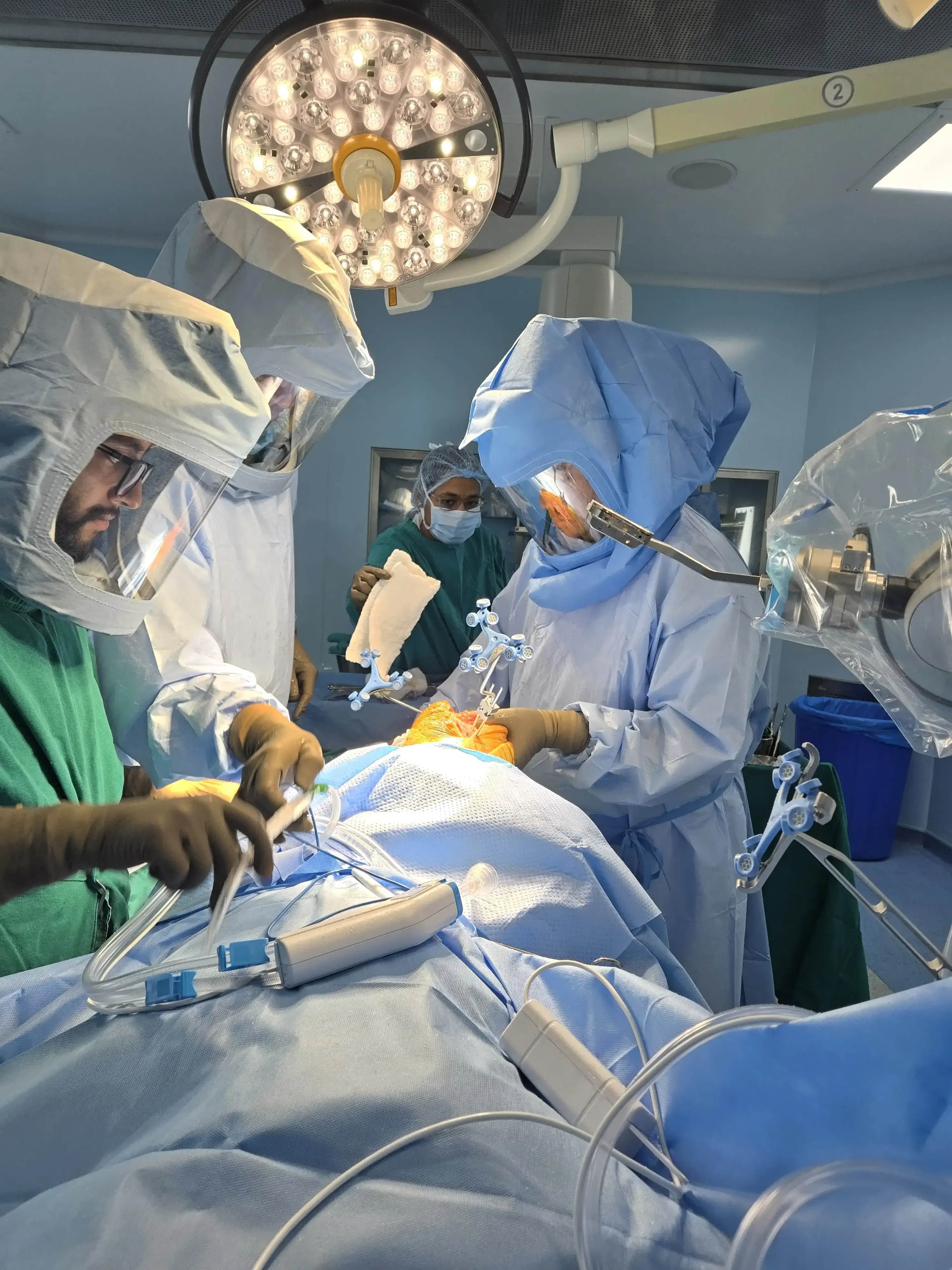
Treatment: At this stage, conservative treatments usually stop providing meaningful relief. Total knee replacement surgery, including modern robotic-assisted approaches, is often the most effective option to restore comfortable movement and quality of life. Our guide on signs you need knee replacement can help you assess where you stand.
How Doctors Confirm Your Stage
Staging is primarily done through a combination of clinical examination and X-ray imaging, which shows joint space narrowing, bone spurs, and bone density changes. In some cases, an MRI may be used to get a more detailed look at cartilage and soft-tissue structures, particularly when planning treatment for moderate to advanced stages.
FAQs
Can arthritis skip stages or move backward? Arthritis does not typically skip stages, and it does not reverse itself once cartilage has worn away. Progression speed varies significantly between individuals — some people stay in Stage 2 for many years, while others progress faster depending on weight, activity level, and joint alignment.
How fast does knee arthritis usually progress? There is no fixed timeline, as progression depends on factors like body weight, activity level, joint alignment, and whether the underlying causes are being managed. This is exactly why lifestyle management in the early stages is so valuable — it can meaningfully slow the pace of progression.
Do I need surgery if I'm in Stage 3? Not necessarily. Many Stage 3 patients manage well for years with physiotherapy, injections, and lifestyle changes. Surgery becomes the primary recommendation when conservative treatments no longer provide adequate relief, which more commonly happens as patients approach Stage 4.
Is walking bad for arthritic knees? No — in most stages, walking and other low-impact activity is actually beneficial, as it helps maintain joint lubrication and muscle strength. The exception is during acute flares of pain or swelling, when temporarily reducing load is more appropriate.
Takeaway
Arthritis cannot be cured, but it can be actively managed at every stage. In Stages 1 and 2, lifestyle changes are the most powerful tool available. In Stage 3, injections and structured physiotherapy help control symptoms. In Stage 4, surgery offers a genuine new lease on mobility and comfort.
Don't wait until Stage 4 to seek help — early intervention gives you the most options. Book an assessment with Dr. Abhijit Kale to find out exactly where you stand.
Need Expert Orthopaedic Care?
Consult Dr. Abhijit Kale, Mumbai's trusted expert in Robotic Joint Replacement & Spine Surgery. Get a personalized treatment plan today.


