16 December 2025
Is Robotic Knee Surgery Safe? Risks, Benefits, and Facts
Concerns about robotic safety? Discover why robotic knee surgery is considered safer than traditional methods, with insights on accuracy, tissue protection, and risks from Dr. Abhijit Kale.

Any surgery carries risks, and when you add advanced technology like robotics into the mix, patients naturally ask:
"Is robotic knee surgery safe? Can the robot malfunction?"
The short answer is: Yes, it is extremely safe. In fact, robotic technology is designed specifically to increase safety and reduce the risks associated with human error.
This article explores the safety profile of robotic knee replacement and addresses common patient fears.
How Robotics Enhances Safety
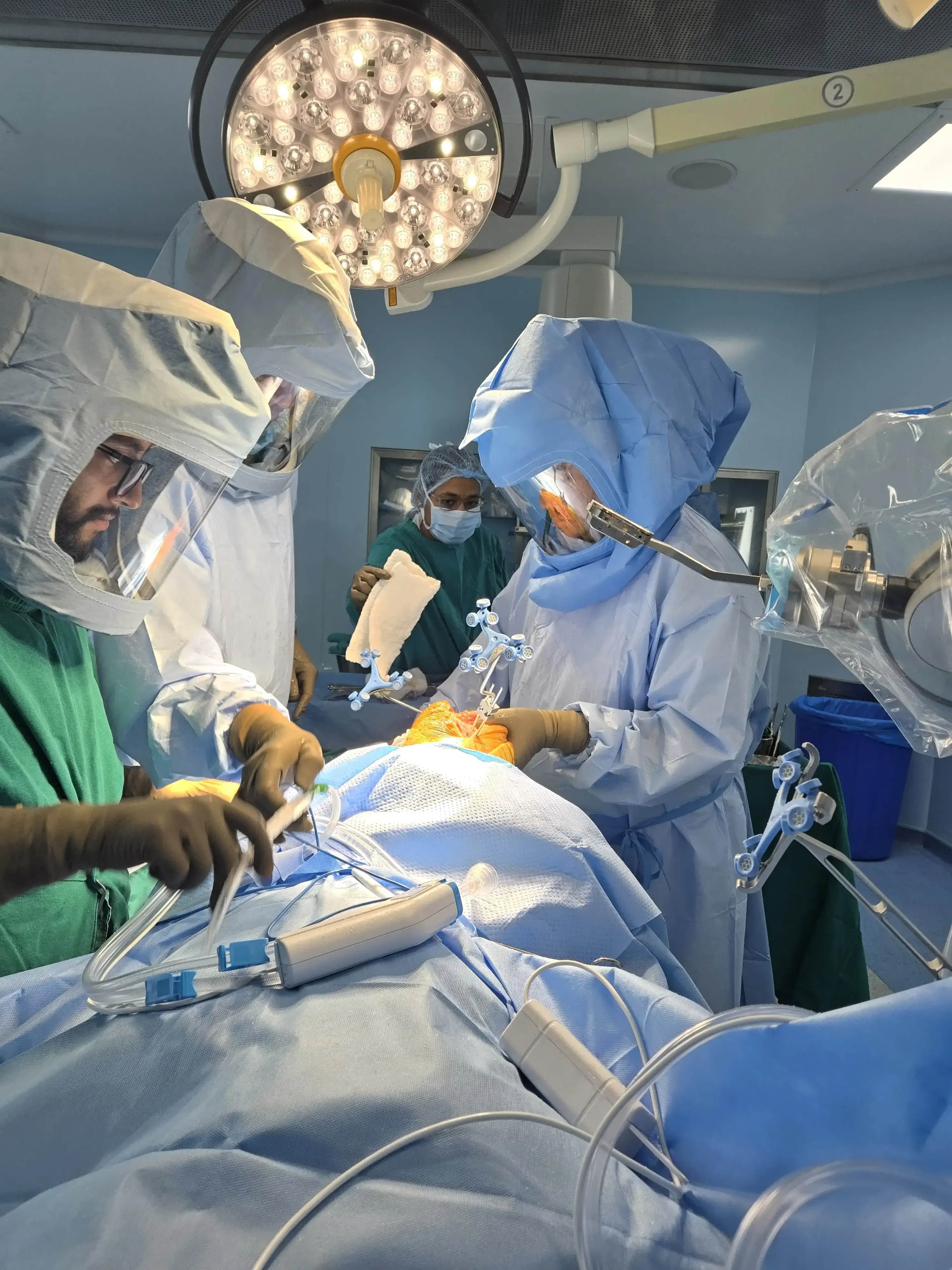
Robotic systems (like the NAVIO, CORI, or Mako) are built with multiple safety redundancies. Here is how they protect you:
1. Virtual Safety Boundaries (Haptics)
This is the biggest safety feature. Before surgery, the surgeon maps out the bone to be removed.
- The robot creates a virtual "fence" around the bone.
- If the surgeon's hand moves the instrument near healthy tissue (nerves, blood vessels, ligaments), the robot automatically stops or provides resistance.
- Benefit: This virtually eliminates the risk of accidental slips or damage to surrounding soft tissues.
2. No Guesswork
In traditional surgery, surgeons rely on visual estimation and mechanical guides (jigs). While effective, these can vary.
- The robot provides real-time data on alignment and rotation.
- Benefit: Reduces the risk of implant malalignment, which is a leading cause of early failure.
3. Reduced Embolism Risk
Some robotic systems (like handheld robotics) do not require an intramedullary rod (a metal rod pushed into the thigh bone for alignment).
- Benefit: This reduces the risk of fat embolism and leads to less bleeding.
Can the Robot "Go Rogue"?
Absolutely not.
This is a common fear, but:
- The robot is not autonomous. It does not make decisions or move on its own.
- The surgeon is in control. The surgeon holds the instrument at all times.
- Dead-man switch: If the surgeon takes their foot off the pedal or hand off the sensor, the system freezes instantly.
There is zero chance of the robot "taking over" the surgery.
Does It Use More Radiation?
This depends on the system:
- CT-Based Systems: Require a CT scan before surgery. The radiation dose is low (similar to a standard diagnostic scan) and considered safe.
- Image-Free Systems: These map the knee in the operating room without a CT scan, meaning zero additional radiation.
Dr. Abhijit Kale can discuss which system is best for your specific case.
Are There Any Specific Risks?
The risks of robotic surgery are generally the same as, or lower than, traditional surgery. However, there are minor technical considerations:
- Tracker Pin Sites: Small pins are placed in the bone to hold sensors. These leave tiny additional scars (a few millimetres) and carry a negligible risk of fracture or infection, which is extremely rare.
- Surgery Time: In the early learning curve, robotic surgery took longer. However, for an experienced surgeon like Dr. Kale, the time difference is negligible.
Comparison: Safety Profile
| Risk Factor | Traditional Surgery | Robotic Surgery |
|---|---|---|
| Soft Tissue Damage | Moderate | Minimal (Protected by haptics) |
| Implant Misalignment | Low | Very Low (High precision) |
| Human Error | Possible | Reduced (Robot verifies plan) |
| Bone Cuts | Manual Jigs | Precision Saw/Burr |
Expert Hands Matter Most
Technology is a tool. The safety of the surgery ultimately depends on the skill of the surgeon using it.
Dr. Abhijit Kale has extensive training and experience in robotic joint replacement, ensuring that the technology is used to its full potential to maximize your safety.
FAQs: Robotic Safety
What happens if the power goes out?
Hospitals have backup generators. Additionally, the robotic system can be disengaged instantly, and the surgeon can complete the procedure manually if ever needed (though this is incredibly rare).
Is the recovery faster?
Yes, because there is less damage to the muscles and ligaments around the knee, patients often report less pain and a quicker return to walking.
Is it safe for older patients?
Yes. The precision and reduced trauma make it an excellent option for senior citizens.
Takeaway
Robotic knee surgery is safer, more precise, and more protective of your natural anatomy than traditional methods. It minimizes human error and optimizes the long-term success of your implant.
Rest assured, you are in safe hands—both human and robotic.
For a consultation, contact Dr. Abhijit Kale.
Need Expert Orthopaedic Care?
Consult Dr. Abhijit Kale, Mumbai's trusted expert in Robotic Joint Replacement & Spine Surgery. Get a personalized treatment plan today.


