29 November 2025
How to Prepare for Knee Replacement Surgery: A Complete Pre-Op Checklist
A step-by-step pre-operative checklist to help you prepare for knee replacement surgery. Guidance from Mumbai orthopaedic and robotic knee surgeon Dr. Abhijit Kale.
Preparing well before knee replacement surgery can make your recovery faster, safer, and smoother.
Most patients underestimate how important the pre-op phase is.
A few simple steps can significantly improve your results — especially with advanced procedures like robotic knee replacement.
Why Pre-Op Preparation Matters
Proper preparation helps:
- Reduce post-surgery pain
- Speed up recovery
- Improve implant longevity
- Lower risk of complications
- Boost confidence before surgery
Think of it as getting your mind, home, and body ready for a life-changing upgrade.
Your Step-by-Step Pre-Op Checklist
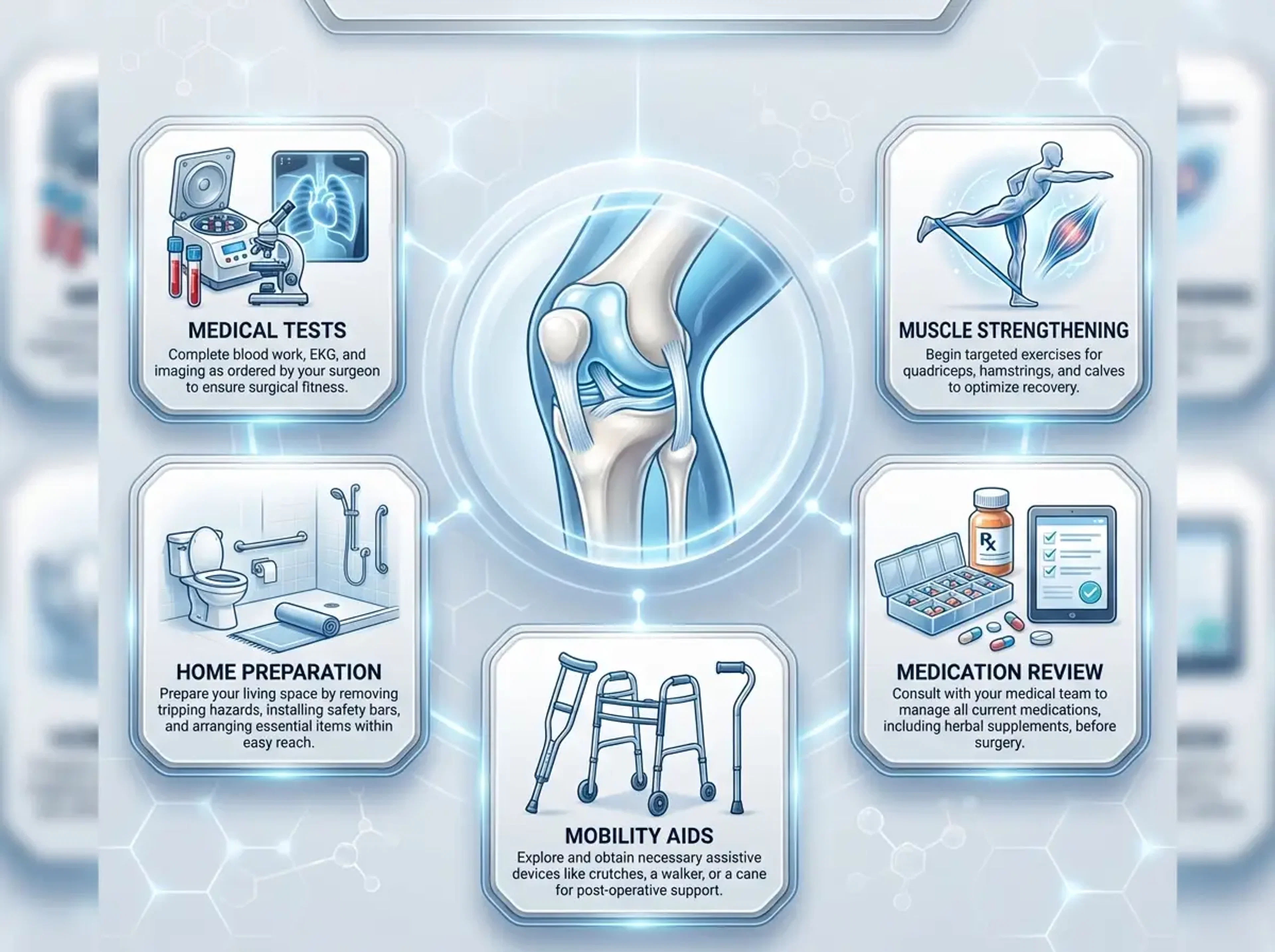
1. Complete Your Medical Evaluations
Before surgery, you may need:
- Blood tests
- ECG
- Chest X-ray
- Dental clearance
- Physician fitness certificate
These tests ensure your body is medically ready for surgery and anesthesia.
2. Strengthen Your Muscles (Pre-Hab)
Stronger legs → Better post-op recovery.
Focus on:
- Quadriceps strengthening
- Hamstring stretches
- Glute activation
- Ankle mobility
Even 10–15 minutes a day can make rehab significantly easier. Learn more about exercises to strengthen your knees before surgery.
3. Prepare Your Home for Recovery
Small changes can dramatically improve safety:
- Remove slippery rugs
- Keep essential items within easy reach
- Set up a rest area on the ground floor
- Add non-slip mats in the bathroom
- Ensure good lighting in hallways
- Place a stable chair with armrests
A safe home = fewer falls and faster recovery.
4. Arrange Support for the First 1–2 Weeks
You’ll need help with:
- Cooking
- Bathing
- Dressing
- Getting in/out of bed
- Hospital visits
Most patients manage independently after 10–14 days.
5. Discuss Medications With Your Doctor
Inform Dr. Kale about:
- Blood thinners
- Diabetic medications
- Supplements
- Painkillers
- Heart medications
Some may need to be stopped or adjusted before surgery.
6. Practice Using a Walker or Cane
Familiarity helps reduce anxiety.
Your physiotherapist may show you:
- Correct walker height
- How to walk safely
- How to climb stairs after surgery
Most patients use a walker for 1–2 weeks. Read about how long it takes to walk after robotic knee surgery to set realistic expectations.
7. Plan Your Post-Surgery Mobility
Good habits after surgery start before surgery.
Prepare to:
- Wear loose clothing
- Begin physiotherapy immediately
- Perform ankle pumps and leg raises
- Sit on a higher chair to avoid deep bending
This helps your new knee function smoothly. Learn more about physiotherapy after knee replacement and total knee replacement recovery week by week.
8. Improve Your Nutrition
Eat foods that support healing:
- Lean proteins
- Fruits and vegetables
- Whole grains
- Hydration
Avoid smoking and alcohol — they slow tissue healing.
9. Understand Your Surgery Day
Dr. Kale’s team will guide you through:
- Admission process
- Anesthesia type
- Expected surgery duration
- Pain control plan
- Immediate post-op mobilization
Knowing what to expect keeps you calm and prepared.
Why Robotic Knee Replacement Requires Precision Prep
With robotic knee replacement, Dr. Kale uses a 3D map of your knee to plan implant position with remarkable accuracy.
Better pre-op muscle control + robotic precision =
Smoother movement, quicker rehab, and more natural-feeling results.
Compare robotic vs traditional knee replacement to understand the differences.
How Dr. Abhijit Kale Helps You Prepare
- Detailed pre-op counselling
- Personalized exercise program
- Guidance on home setup
- Clear instructions on medicines
- Physiotherapy coordination
- Access to a dedicated support team
You’ll know exactly what to do — every step of the way.
FAQs
When should I start preparing?
Ideally 2–4 weeks before surgery.
Do I need to stop eating before surgery?
Yes — usually 8 hours before your scheduled time (your care team will confirm).
Will pre-hab really help?
Absolutely. Patients who strengthen their leg muscles recover noticeably faster.
Takeaway
Preparation is not optional — it’s a superpower that speeds up recovery and improves surgical outcomes.
With the right checklist and expert guidance from Dr. Abhijit Kale, you’ll walk confidently into surgery and walk out with a stronger, more stable knee.
👉 Book your pre-surgery consultation: Contact Us or visit our clinic in Dadar, Mumbai.
Need Expert Orthopaedic Care?
Consult Dr. Abhijit Kale, Mumbai's trusted expert in Robotic Joint Replacement & Spine Surgery. Get a personalized treatment plan today.